

Stanford MBA tuition fees for Indians in 2025-26: Fees, Living Expenses, Scholarships & ROI
In 2025, Stanford MBA tuition fees are expected to cross USD 82,000 per year (₹68 lakh at current exchange rates), excluding living expenses. For an Indian student, that translates into a ₹1.5 crore+ investment over two years when combined with housing, food, healthcare, and personal expenses. The steep cost often becomes the first barrier to dreamers who aspire to study at Stanford GSB, especially when converting rupees to dollars feels overwhelming. Rising living costs in Palo Alto, one of the most expensive student hubs in the U.S., only add to this financial challenge.
Yet, despite the sticker shock, the Stanford MBA tuition fees tell only part of the story. For Indian students, this program offers one of the highest long-term ROIs in global business education. With scholarships designed for Indian applicants, generous need-based fellowships, and post-MBA salaries often crossing USD 180,000 (₹1.5 crore+), the Stanford MBA becomes less of an expense and more of a transformational investment. This blog unpacks the total cost, living expenses, scholarships, and ROI-so you can decide if Stanford is the right choice for you.
Read More: Executive MBA vs Full-time MBA: 7 Powerful Insights for International Students in 2025
Stanford MBA Total Cost 2025: Tuition and Hidden Expenses
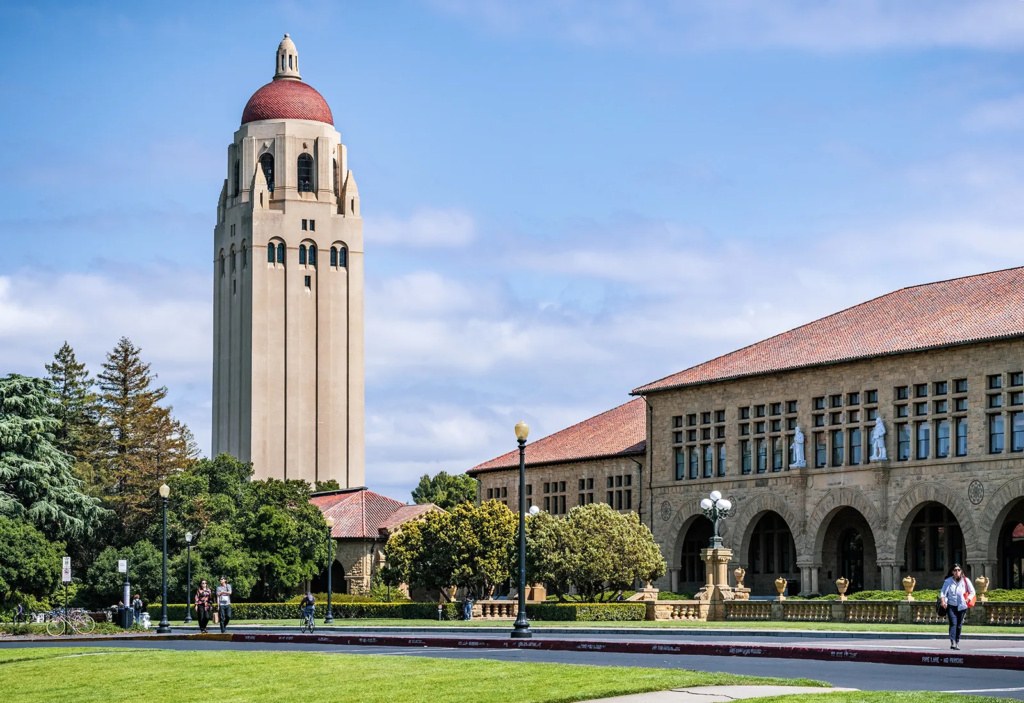
The Stanford MBA tuition fees for the 2025 intake are projected at around USD 82,455 per year, keeping in line with the 2024 figures and recent hikes. Over the two-year program, this amounts to nearly USD 165,000 (₹1.36 crore).
But tuition is just the beginning. There are other mandatory costs:
- Health insurance (USD 6,000-7,000 annually)
- Books and materials (USD 1,000-1,500 annually)
- Student activity fees and tech support costs (USD 1,000 annually)
What many Indian applicants underestimate are hidden costs, such as:
- Global study trips (USD 5,000-10,000 each)
- Career networking treks (USD 3,000-5,000)
- Tech/software subscriptions for coursework (USD 500 annually)
- Case competition participation and conferences
| Expense Category | Annual Cost (USD) | Two-Year Cost (USD) | Two-Year Cost (INR, ~₹83/USD) |
| Tuition Fees | 82,455 | 164,910 | ₹1.36 crore |
| Health Insurance | 7,000 | 14,000 | ₹11.6 lakh |
| Books & Materials | 1,200 | 2,400 | ₹2 lakh |
| Student Fees/Tech Support | 1,000 | 2,000 | ₹1.6 lakh |
| Hidden Costs (Trips, etc.) | 10,000 | 20,000 | ₹16.6 lakh |
| Total | 101,655 | 203,310 | ₹1.68 crore |
For most Indian students, this ₹1.6-1.7 crore total spend is the baseline to prepare for when planning Stanford MBA 2025.
Stanford MBA Cost of Living in Palo Alto (2025 Estimates)

While tuition grabs headlines, the cost of living in Palo Alto is often the real budget shock. Stanford’s location in Silicon Valley, near San Francisco, means some of the highest housing rents in the U.S.
Housing
- On-campus housing: USD 1,800-2,500 per month (₹1.5-2 lakh) depending on shared vs private apartments.
- Off-campus housing: USD 2,500-3,500 per month (₹2-2.9 lakh).
Other living costs per month (USD):
- Food: 500-800
- Utilities: 150-250
- Transportation: 100-200
- Healthcare & personal: 400-600
Table: Annual Cost of Living in Palo Alto (2025)
| Category | Annual Range (USD) | INR Equivalent (₹83/USD) |
| Housing | 21,600 – 42,000 | ₹18 – 34 lakh |
| Food | 6,000 – 9,600 | ₹5 – 8 lakh |
| Utilities | 1,800 – 3,000 | ₹1.5 – 2.5 lakh |
| Transport | 1,200 – 2,400 | ₹1 – 2 lakh |
| Personal/Health | 4,800 – 7,200 | ₹4 – 6 lakh |
| Total | 35,400 – 64,200 | ₹29 – 53 lakh |
Insight from student forums: Many Indian students stress that Palo Alto’s rent rivals New York, making housing the single biggest shock factor after tuition. Some reduce costs by sharing off-campus housing further from campus.
Scholarships and Financial Aid for Indian Students

One of the most encouraging aspects of Stanford GSB is its generous financial aid system, especially for international students.
- Stanford GSB Fellowships: Need-based aid up to USD 40,000 per year.
- Reliance Dhirubhai Fellowship: Exclusive for Indians, covering tuition + living costs for up to 5 students annually, with a condition to return to India post-MBA.
- External scholarships: Tata Scholarship, J.N. Tata Endowment, Inlaks Foundation, etc.
Key differences for international students:
- Stanford’s aid is need-based, not merit-based.
- Many Indians on forums note Stanford is more generous than peers like Wharton or Booth.
- Aid can reduce the net Stanford MBA tuition fees by 25-50% for those with strong financial need.
Application Tip: Clearly document family income/assets and explain how you’ll leverage Stanford to impact India-this resonates with fellowship reviewers.
Funding a Stanford MBA as an Indian Student
Even with scholarships, most Indian students require education loans or mixed funding strategies.
Options available:
- Indian banks/NBFCs: SBI, Axis, ICICI offer collateral loans (up to ₹1.5 crore).
- International lenders: Prodigy Finance, MPower provide non-collateral loans, though at higher interest rates (10-12%).
- Employer sponsorships: Rare but possible for senior professionals.
- Family support: Still a common strategy for partial funding.
A balanced approach-loan + partial scholarship + family support-is typical. Students on Reddit often advise taking dollar-denominated loans when repayment will be in USD post-MBA.
ROI of Stanford MBA for Indians: Salary vs Debt
The real question: Is the ₹1.6 crore+ cost worth it?
Salaries post-MBA (Stanford GSB 2024 median):
- Consulting: USD 190,000
- Tech/PM roles: USD 165,000
- Finance/PE/VC: USD 175,000
- Overall average: USD 180,000+
ROI Perspective:
- Short-term ROI: Loan repayment possible within 3-5 years if placed in U.S. consulting/tech roles.
- Long-term ROI: Beyond salaries, Stanford’s alumni network and Silicon Valley access open doors to entrepreneurship, VC funding, and global leadership positions.
Table: ROI Timeline (Indians at Stanford MBA)
| Factor | India Placement | U.S. Placement |
| Avg. Starting Salary | USD 70,000 (₹58 lakh) | USD 180,000 (₹1.5 crore) |
| Loan Repayment | 7-10 years | 3-5 years |
| Long-term ROI | Moderate | Very High |
How to Apply to Stanford MBA 2026: Step-by-Step
- Check Eligibility:
- Bachelor’s degree
- GMAT/GRE (Stanford has no minimum, but avg GMAT ~737)
- 2-6 years’ work experience (quality > quantity)
- Application Components:
- Resume (leadership & impact)
- Essays: “What matters most to you and why?” + “Why Stanford?”
- Recommendations: Preferably, senior managers or mentors
- Interview: Behavioral + leadership focus
- Timeline (2026 Intake):
- Round 1: Sep 2025
- Round 2: Jan 2026
- Round 3: Apr 2026
Tip for Indians: Avoid generic answers. Showcase unique India-specific leadership stories and link them to global aspirations.
Comparing Stanford MBA with Other Top MBAs for Indians
Indian applicants often compare Stanford MBA tuition fees and ROI with other global programs.
Table: Stanford vs Other MBAs
| Program | Duration | Tuition (USD) | Total Cost (USD) | Scholarships for Indians |
| Stanford MBA | 2 years | 164,910 | 203,310+ | Reliance Dhirubhai + aid |
| Harvard MBA | 2 years | 168,800 | 210,000+ | Need-based aid only |
| INSEAD MBA | 1 year | 112,000 | 130,000 | INSEAD India Fund |
| ISB (India) | 1 year | 45,000 (₹39L) | 55,000 | Limited |
Insight: While ISB and INSEAD offer lower-cost routes, Stanford’s Silicon Valley location and alumni network justify the premium for those targeting global careers.
Conclusion: Is the Stanford MBA Worth It for Indians?
The Stanford MBA tuition fees may seem daunting-₹1.6 crore+ is no small figure for Indian students. Yet, when viewed as an investment, not an expense, the equation shifts. With average post-MBA salaries over ₹1.5 crore annually, scholarships that reduce tuition significantly, and opportunities in Silicon Valley that no other MBA ecosystem matches, Stanford delivers value far beyond its upfront cost.
Remember the Indian student in the introduction debating rupee-dollar conversion? For them, and many like them, the real decision isn’t about whether the Stanford MBA is expensive. It’s about whether they are ready to maximize the platform: building global networks, accessing world-class faculty, and fast-tracking into leadership or entrepreneurship. For those who prepare financially and strategically, Stanford MBA isn’t just worth it-it’s transformative.
FAQs
1. What is the Stanford MBA total cost for 2025?
The total cost, including tuition, living, and hidden expenses, is estimated at USD 200,000+ (₹1.6-1.7 crore) for two years.
2. How much is the Stanford MBA cost of living in Palo Alto?
Annual living costs range from USD 35,000-64,000 (₹29-53 lakh), mainly driven by high housing expenses.
3. Are there Stanford MBA scholarships for Indians?
Yes, need-based aid plus the Reliance Dhirubhai Fellowship specifically support Indian students. Aid can reduce tuition by 25-50%.
4. What is the Reliance Dhirubhai Fellowship at Stanford?
It covers tuition + living for 5 Indian students annually, with a return-to-India requirement post-MBA.
5. How can Indian students fund a Stanford MBA abroad?
Through a mix of Indian bank loans, international lenders like Prodigy, scholarships, and family support.
6. What is the ROI of a Stanford MBA for Indians?
U.S. placements offer salaries of USD 180,000+, enabling loan repayment in 3-5 years. Long-term ROI is very high.
7. How do I apply for the Stanford MBA 2026?
Apply in one of 3 rounds (Sep 2025, Jan 2026, Apr 2026) with GMAT/GRE scores, essays, recommendations, and interviews.
| Wish to know more about our services? We would love to hear from you. Write to us at info@al-connect.in. |


Add a comment