

How to Choose the Right Erasmus Mundus Program
Do you have lots of questions regarding how to choose the right Erasmus Mundus program?Does CGPA matter to the Erasmus Mundus program? What documents are required for the Erasmus Mundus program? It’s best to check every university website before applying to the programs. But before going to that, check out the blog to get detailed information about how to choose the right Erasmus Mundus program.
What is Erasmus Mundus?
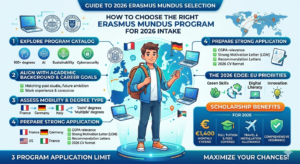
Benefits of Enrolling in an Erasmus Mundus Programme:
- International Exposure: Students get to study in at least three different countries, providing a multicultural experience and global perspective.
- Quality Education: The program is delivered by a consortium of top-ranked universities, ensuring a high standard of education. Ranking of Erasmus Mundus universities is equally essential for the students.
- Comprehensive Support: Full scholarships cover tuition fees travel expenses, and provide a living allowance, easing the financial burden on students.
- Networking Opportunities: Interaction with diverse students and faculty can lead to lifelong professional connections. You can grow your career prospects after Erasmus Mundus.
How to Choose the Right Erasmus Mundus Program?
Why Apply?
Choosing to apply for an Erasmus Mundus Joint Master (EMJM) offers numerous advantages, making it a coveted opportunity for students worldwide. Here’s why you should consider using:
- Prestigious Program: The EMJM is a highly respected international master’s program jointly designed and delivered by a consortium of higher education institutions. This collaborative approach ensures diverse academic perspectives and expertise and helps you for how to choose the right Erasmus Mundus program.
- Global Experience: The program involves at least three institutions from three countries and multiple associated partners. This structure gives students a rich, multicultural education and the chance to experience different academic and cultural environments.
- Comprehensive Curriculum: The Erasmus Mundus Courses typically include various components such as study periods, research, traineeship, thesis preparation, and defense. This well-rounded curriculum equips students with a broad skill set and practical experience.erasmus mundus courses
Scholarships Available
One of the standout features of the Erasmus Mundus program is the availability of full scholarships for top-ranked students. These Erasmus Mundus joint master’s degree scholarships are incredibly comprehensive:
The 2026 funding model has been streamlined to simplify student support. If you are a top-ranked applicant, the scholarship covers:
-
Full Tuition & Participation Costs: $0 out-of-pocket fees.
-
Monthly Living Allowance: A fixed stipend (typically €1,400/month in 2026) for the full duration of the program.
-
Travel & Installation: Specialized “top-ups” based on your distance from the host country.
-
Comprehensive Insurance: Full health and accident coverage across all host nations.
The duration of an Erasmus Mundus Joint Master can vary depending on the specific program:
- 1 Academic Year: Equivalent to 60 ECTS credits.
- 1.5 Academic Years: Equivalent to 90 ECTS credits.
- 2 Academic Years: Equivalent to 120 ECTS credits.
Type of Degree Awarded
Upon successful completion of the program, students receive either a joint degree or multiple degrees:
- Joint Degree: A diploma issued by at least two higher education institutions from different countries.
- Multiple Degrees: Separate diplomas issued by two or more institutions participating in the consortium.
Search and Apply
Finding and applying for the right Erasmus Mundus program involves several key steps and considerations:
How to Choose the Right Erasmus Mundus Program
- Direct Application: Students must apply directly to the institution running their chosen program.
- Course Catalog: The Erasmus Mundus course catalog provides detailed information on the latest programs available. This is an essential resource for identifying suitable programs.
- Application Timeline: Applications are typically submitted between October and January for courses starting the following academic year.
Requirements:
- Bachelor’s Degree: Applicants must hold a bachelor’s degree or be in the final year of their bachelor’s studies.
- Equivalent Learning: In some cases, a bachelor’s equivalent level of learning may also be accepted, depending on the specific program’s criteria.
Factors to Consider for How to Choose the Right Erasmus Mundus Program
When selecting an Erasmus Mundus program, aligning your selection with your academic background and career goals is essential. Here are some critical factors to consider:
- Program Alignment: Ensure the program matches your previous studies and future career aspirations. This alignment will enhance your learning experience and improve your career prospects.
- Living Conditions: Consider the living conditions in the host countries, including language, culture, and climate. Researching these aspects can help you prepare better for your stay abroad.
- Alumni Insights: Connecting with alumni can provide valuable insights into the program’s strengths and potential challenges. Alumni can offer firsthand information about the curriculum, faculty, and overall experience.
Evaluation and Selection Process
Program Evaluation
Choosing the right Erasmus Mundus program requires careful evaluation to ensure it aligns with your personal and academic goals. Here’s how you can effectively evaluate a program: how to choose the right Erasmus Mundus program
- Program Criteria: Each Erasmus Mundus program has specific criteria, including course content, structure, duration, and partner institutions. Review these details to ensure they match your academic interests and career plans.
- Academic Goals: Identify how the program’s curriculum and specializations align with your goals. Look for programs that offer courses and research opportunities in your area of interest.
- Reputation of Institutions: Consider the reputation and ranking of the universities involved in the program. Higher-ranked institutions often provide better resources, faculty, and networking opportunities.
- Career Prospects: Investigate the career support services offered by the program, including internships, job placement assistance, and connections with industry professionals. Look into the career paths of program alumni to gauge potential career outcomes.
Selection Process
Securing a place in an Erasmus Mundus program is highly competitive. Here are some best tips to get selected:
- Strong Application: Prepare a compelling application highlighting your academic achievements, relevant experience, and motivation for applying. Tailor your statement to demonstrate your fit for the program.
- References: Obtain strong letters of recommendation from professors or professionals who can attest to your academic abilities and potential for success in the program.
- Academic Excellence: Maintain a high academic standing in your current studies. Programs often look for students with excellent academic records.
- Relevant Experience: Erasmus Mundus study abroad experience also looks after all pertinent experience, such as internships, research projects, or extracurricular activities, that showcases your skills and commitment to your field of study.
Application Process
Required Documents
Applying for an Erasmus Mundus Joint Master program requires a thorough preparation of documents. Here’s an overview of what you’ll need and some tips for gathering them:
Overview of Application Requirements:
- Application Form: Complete the online application form provided by the program.
- Academic Transcripts: Provide transcripts from your undergraduate studies, showing all courses and grades.
- Degree Certificate: Submit a copy of your bachelor’s degree certificate. A provisional certificate may be accepted if you are in your final year.
- Curriculum Vitae (CV): Include a detailed CV highlighting your academic and professional experiences.
- Personal Statement: Write a compelling personal statement that explains your motivation for applying, your academic and career goals, and why you are a good fit for the program.
- Letters of Recommendation: Obtain at least two letters of recommendation from professors or professionals who can vouch for your academic and professional capabilities.
- Proof of English Proficiency: Provide test scores from recognized English proficiency tests like IELTS or TOEFL, if required by the program.
- Passport Copy: Include a copy of your passport for identification purposes.
Tips for Gathering Necessary Documents
- Start Early: Gather your documents well in advance to avoid last-minute stress.
- Request Transcripts and Certificates: Contact your university’s registrar’s office early to request your transcripts and degree certificates.
- English Proficiency Tests: If needed, book your English proficiency test well to ensure you receive your scores before the application deadline.
- Personal Statement: Take the time to write and refine your statement. Seek feedback from professors or mentors.
- Letters of Recommendation: Request letters from your recommenders early and provide them with all necessary information about the program and the submission process.
Advice with Your Application
Resources Available
Navigating the application process for an Erasmus Mundus Joint Master program can be challenging, but several resources can help you succeed.
- Erasmus Mundus Association (EMA): The EMA offers various resources, including guides, webinars, and forums where current students and alumni share their experiences and advice.
- University Websites: Check the participating universities’ websites for detailed information about the program, application procedures, and contact details for further inquiries.
- Official Program Websites: Each Erasmus Mundus program has an official website with comprehensive details about the curriculum, partner institutions, application requirements, and deadlines.
- Online Communities: Join online communities, such as Facebook groups or LinkedIn networks, to connect with other applicants and alums. These communities are valuable for sharing tips and getting support.
Conclusion
Choosing the right Erasmus Mundus program is more than just a search for a degree; it is a strategic investment in your global identity. In 2026, the landscape of higher education is no longer bound by borders or traditional classroom walls. By selecting a program that aligns with the EU’s vision for a sustainable, digital, and interconnected future, you aren’t just earning a master’s—you are joining an elite global network of changemakers.
The competition is fierce, but the rewards are unparalleled. Beyond the €1,400 monthly stipend and the prestigious diplomas lies an experience that will redefine your perspective on culture, collaboration, and innovation. Whether you are navigating the streets of Paris, the labs of Berlin, or the tech hubs of Tallinn, the Erasmus Mundus journey will challenge you to grow in ways a standard degree never could.
Can I apply to more than three Erasmus Mundus programs in the 2026 cycle?
Technically, the strict EU-wide “3-program limit” has been relaxed in recent years to allow for more flexibility. However, most consortium coordinators strongly advise against applying to more than 3 programs. Why? Because each application requires a highly tailored Motivation Letter. Spreading yourself across 5 or 6 programs often results in generic essays, which is a leading cause for rejection in the high-stakes 2026 selection process.
What happens if I am admitted but placed on the “Reserve List”?
Being on the Reserve List means you met the academic criteria, but the available scholarship slots (usually 15–22 per program) were filled. You still have two options:
Wait for a “No-Show”: If a selected candidate declines the scholarship or fails their visa interview, the scholarship is offered to the next person on the list.
Self-Funded Admission: You can often enroll as a self-funded student. In 2026, many students use this admission letter to secure external funding from sources like the DAAD (Germany), Campus France, or national bank loans.
I haven’t received my IELTS/TOEFL results yet; can I still apply?
Most 2026 programs allow you to submit your application without the final certificate only if you can provide proof that you are registered for a test date before the final selection meeting (usually in March). However, some highly competitive programs (especially in Law or Literature) require the scores at the time of submission. Always check the “Requirements” tab of your specific consortium—if they state “Mandatory,” your application will be filtered out by the AI-screener if the file is missing.
Can I apply if I’m in the final year of my Bachelor’s degree?
Absolutely. You do not need your final degree certificate to apply for the 2026 intake. You can submit a “Provisional Certificate” or an official letter from your university Registrar stating that you are on track to graduate by August 2026.
Add a comment